
After Row 30, check the cloth’s width and height. At the stated gauge, it should be close to 7.5 inches square. If your fabric is slightly rectangular, that is fine for a dishcloth; if it is much wider or taller, check your gauge before making another one.
Finishing
Cut the yarn, leaving a tail of about 6 inches (15 cm). Pull the tail through the final loop to secure it. Thread the tail onto a tapestry needle and weave it through several stitches on the wrong side, changing direction once so it is less likely to loosen in the wash. Weave in the starting tail the same way. Trim the ends close to the fabric without cutting the stitches.
Lightly dampen the cloth and lay it flat. Smooth the edges with your hands and let it dry completely. Blocking is optional, but it can help even out the sides if your tension changed slightly while working.
Care & Washing Instructions
- Wash cotton cloths with similar colors in warm water, around 40°C (104°F), or follow the yarn label if it gives a different temperature.
- Lay flat to dry for the most even shape; cotton can also be tumble-dried on low if the yarn label allows it.
- While damp, smooth the corners and edges into shape. Avoid stretching the cloth, which can leave it wider than intended.
Pro Tips & Common Mistakes to Avoid
- Keep your tension steady. Cotton has little stretch, so very tight stitches can make the hook tiring to use and create a stiff cloth. If the fabric feels board-like, try a slightly larger hook.
- Count every row. Place a marker in the first stitch of each row or use a row counter. Missing the last stitch is a common reason the edges gradually slope inward.
- Weave in tails securely. Thread each tail through the backs of several stitches, then change direction before trimming. A short tail woven through only one stitch can work loose with repeated washing.
- Adjust size by changing the stitch count and row count equally. For a wider cloth, add chains to the foundation and make the same number of single crochet stitches in each row. Add or remove rows to change the height. A larger cloth uses more yarn, so allow extra yardage before you begin.
Frequently Asked Questions
Can I use acrylic yarn instead of cotton?
You can, but acrylic usually absorbs less water and may feel warmer or less scrubby at the sink. Check the yarn label for washing instructions, and make a small swatch first because acrylic can produce a softer, stretchier cloth.
How can I make the dishcloth smaller or larger?
For a smaller cloth, begin with fewer chains and work fewer rows, keeping the stitch count the same on every row. For a larger cloth, add chains and rows. The final dimensions depend on your gauge, and a larger version will require more yarn than the 90-yard estimate.
Is this pattern suitable for a first crochet project?
Yes. It uses only chains and single crochet stitches, with no color changes, shaping, or joining. Count the 30 stitches at the end of each row, especially for the first few rows, to keep the sides straight.
May I sell dishcloths made from this pattern?
Check the designer’s terms before selling finished items, and follow any credit or selling conditions they specify. If you sell the cloth, describe the fiber accurately and include care instructions from the yarn label.
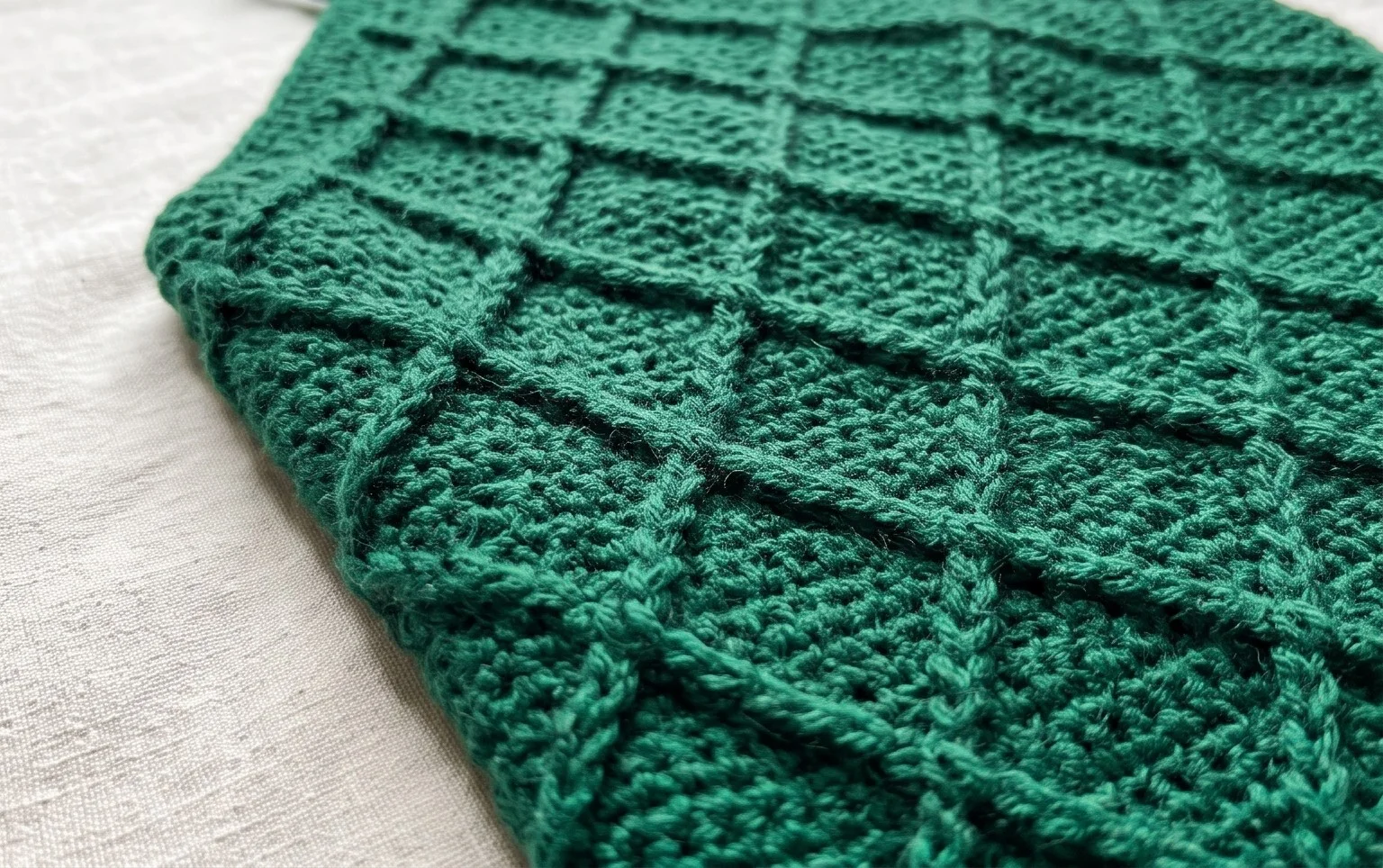 Pin for later!
Once the last rows are finished, the emerald color and flared lace hem give the gown a graceful shape that is satisfying to see come together. Take a moment to check the fit and smooth the lattice with gentle blocking, following the care instructions for your yarn. For a simple variation, work the same design in deep navy or another jewel tone, keeping the stitch pattern and shaping unchanged. If you make one, share a photo on Pinterest or your favorite social platform so other crocheters can see how your yarn choice looks. Then explore more free crochet patterns on the blog for your next project.
PinterestFacebookWhatsAppFlipboardShare
