481
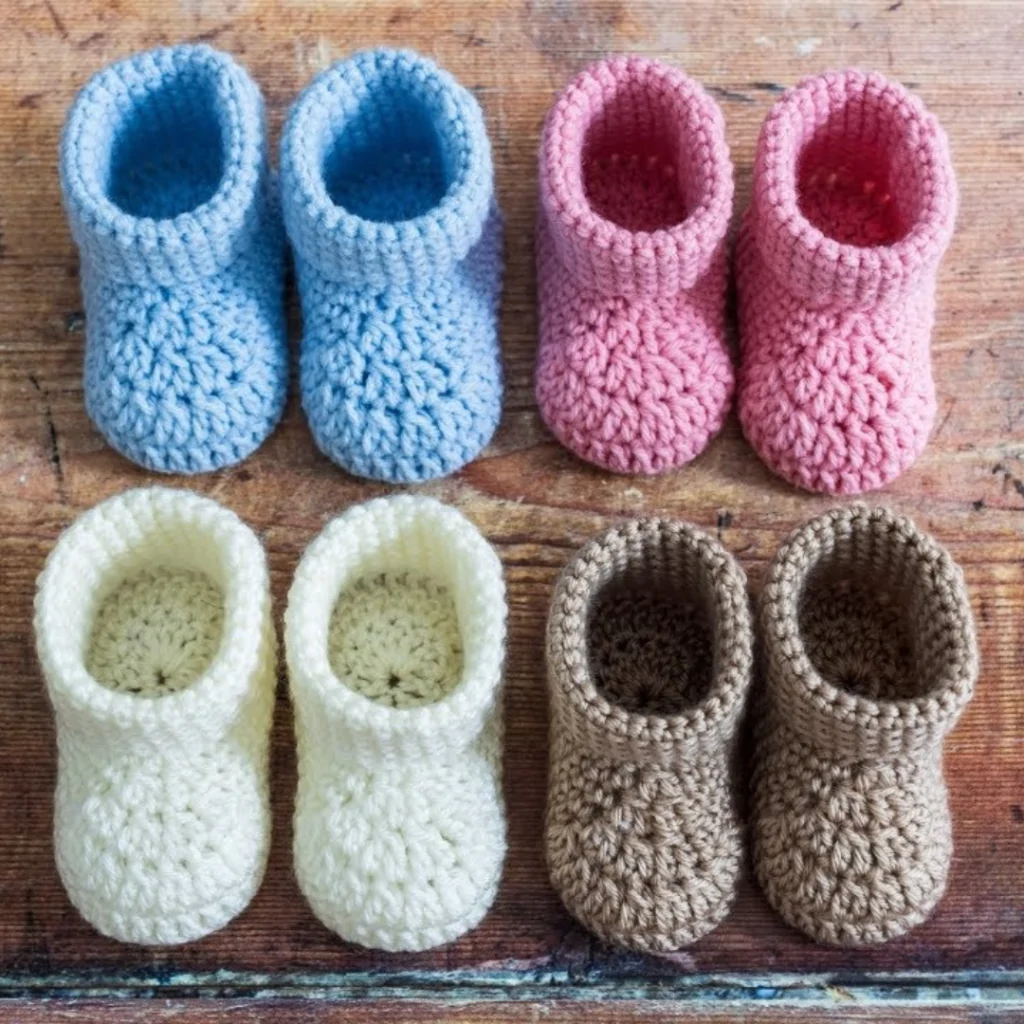
Fast crochet baby booties are the perfect handmade gift for newborns. These soft, cozy booties are quick to make and can be customized in any color. Creating Fast Crochet Baby Booties is one of those projects that perfectly captures the joy of crochet in its purest form—quick, practical, and incredibly satisfying. As an experienced crocheter, I’ve always appreciated patterns that come together swiftly without sacrificing beauty, and baby booties are exactly that kind of project.
They’re small enough to finish in a short sitting, yet detailed enough to keep your hands engaged and your creativity flowing. And there’s something undeniably special about crafting something so tiny, knowing it’s meant to keep little feet warm and comfortable.
When I start a pair of baby booties, the very first thing I consider is yarn. For baby items, softness is absolutely essential. I usually reach for a high-quality baby acrylic or a soft cotton blend that feels gentle against the skin. The yarn should be smooth, not too fuzzy, and easy to care for, since baby items are often washed frequently. I also pay attention to the weight of the yarn. A light to medium weight works best, giving the booties enough structure while still keeping them soft and flexible.
How to Make Fast Crochet Baby Booties
These fast crochet baby booties are designed to be simple yet stylish, with a snug fit to keep little feet warm. The pattern works up quickly, making it great for last-minute gifts. You can personalize them with different yarn colors or add embellishments like buttons or bows for a unique touch.
Fast crochet baby booties are an adorable and practical crochet project. Whether you’re making them for a baby shower or your little one, they are a must-have for any crochet collection!
Color choice is always a delightful part of the process. Soft pastels are a classic option—think pale pinks, baby blues, creamy whites—but I also enjoy experimenting with neutral tones or even subtle color combinations. Sometimes I’ll use a contrasting color for the sole or edging, just to add a bit of visual interest without overwhelming the design. Even in such a small project, these little touches can make a big difference.
Hook size plays an important role in achieving the right fit and texture. I typically follow the yarn’s recommended hook size, but I’m not afraid to adjust slightly depending on how the fabric feels. For booties, I like a fabric that’s snug and dense enough to hold its shape, but still soft and pliable. Too tight, and the booties can feel stiff; too loose, and they may not stay on the baby’s feet. Finding that balance is something that becomes second nature with experience.
Detailed Recipe: Fast Crochet Baby Booties
The construction of fast crochet baby booties is what makes them so enjoyable. Most designs start with the sole, worked in rounds to create a small, oval base. This is where I focus on even increases and smooth shaping. The sole sets the foundation, so I take care to keep it symmetrical and well-formed. Once the base is complete, the sides begin to build upward, and this is where the bootie really starts to take shape.
Working the body of the bootie is one of my favorite parts. The transition from sole to upper section often involves a change in stitch direction or technique, creating a clean edge that defines the shape. I enjoy watching the bootie form in my hands, round by round, until it becomes a recognizable little shoe. It’s a simple process, but incredibly satisfying.
The top of the bootie is where you can add a bit of character. Some designs include a small cuff, which can be folded over for a cozy look. Others feature a strap or button to help keep the booties secure. I always make sure any added elements are both functional and comfortable. For example, if I’m adding a button, I ensure it’s securely attached and appropriately sized.
Because these are fast projects, it’s easy to get into a rhythm and complete a pair in one sitting. Still, I never rush the important details. I take a moment to compare both booties, making sure they match in size and shape. Even small differences can be noticeable, so I like to check my work as I go. Consistency is key, especially when working on pairs.
Video Tutorial Here!
