
After Row 32, the cloth should measure close to 7.75 inches wide and 8 inches tall at the stated gauge. If it is much wider than it is tall, check your row gauge and count the rows before finishing. Fasten off, leaving a tail long enough to weave in, then pull the yarn through the last loop.
Finishing
Thread the yarn tail onto a tapestry needle. Weave it through the backs of several stitches, change direction, and weave through a few more stitches so it stays secure during washing. Repeat with the starting tail. Trim the ends close to the fabric without cutting into the stitches. Wash and dry the cloth according to the yarn label, then lay it flat and gently square the corners.
Care & Washing Instructions
- Wash cotton in a machine or by hand using warm water, up to 40°C (104°F), unless the yarn label gives a lower limit.
- Dry flat or tumble-dry on low if the yarn label allows it; reshape the edges while the cloth is damp.
- After washing, smooth the cloth flat and square its corners; follow the yarn label if you use a cotton blend or another fiber.
Pro Tips & Common Mistakes to Avoid
- Keep your tension steady, especially along the foundation chain. A tight chain can pull the bottom edge inward; loosen your chain or use a hook one size larger just for it.
- Count 31 stitches on every row. If the edges begin to slope, you may have skipped the first stitch or accidentally worked into the turning chain.
- Weave in each end in more than one direction. A short tail hidden through only a single row can work loose after repeated washing.
- For a larger cloth, add chains in multiples of one and work the same number of single-crochet rows as your target width requires. A larger cloth takes more yarn, so allow extra yardage and check that the row and stitch counts give you a square.
Frequently Asked Questions
Can I use a different cotton yarn?
Yes. Choose a similar worsted-weight cotton and check the label for washing instructions. A thinner yarn makes a smaller, lighter cloth, while thicker yarn makes a denser one and may need a larger hook and more yardage.
How can I make the dishcloth smaller or larger?
Change the starting chain to adjust the width, then add or remove rows to match the height. Keep the stitch count consistent across every row, and remember that a larger cloth uses more yarn and takes longer to dry.
Is this pattern suitable for a beginner?
Yes, if you are comfortable making a chain and single crochet. The main challenge is keeping 31 stitches in every row, so count before turning and check the finished dimensions as you work.
May I sell dishcloths made from this pattern?
You can sell finished items if the designer’s terms allow it. Check the pattern’s usage rules, and write your own product description rather than presenting the pattern instructions as your own.
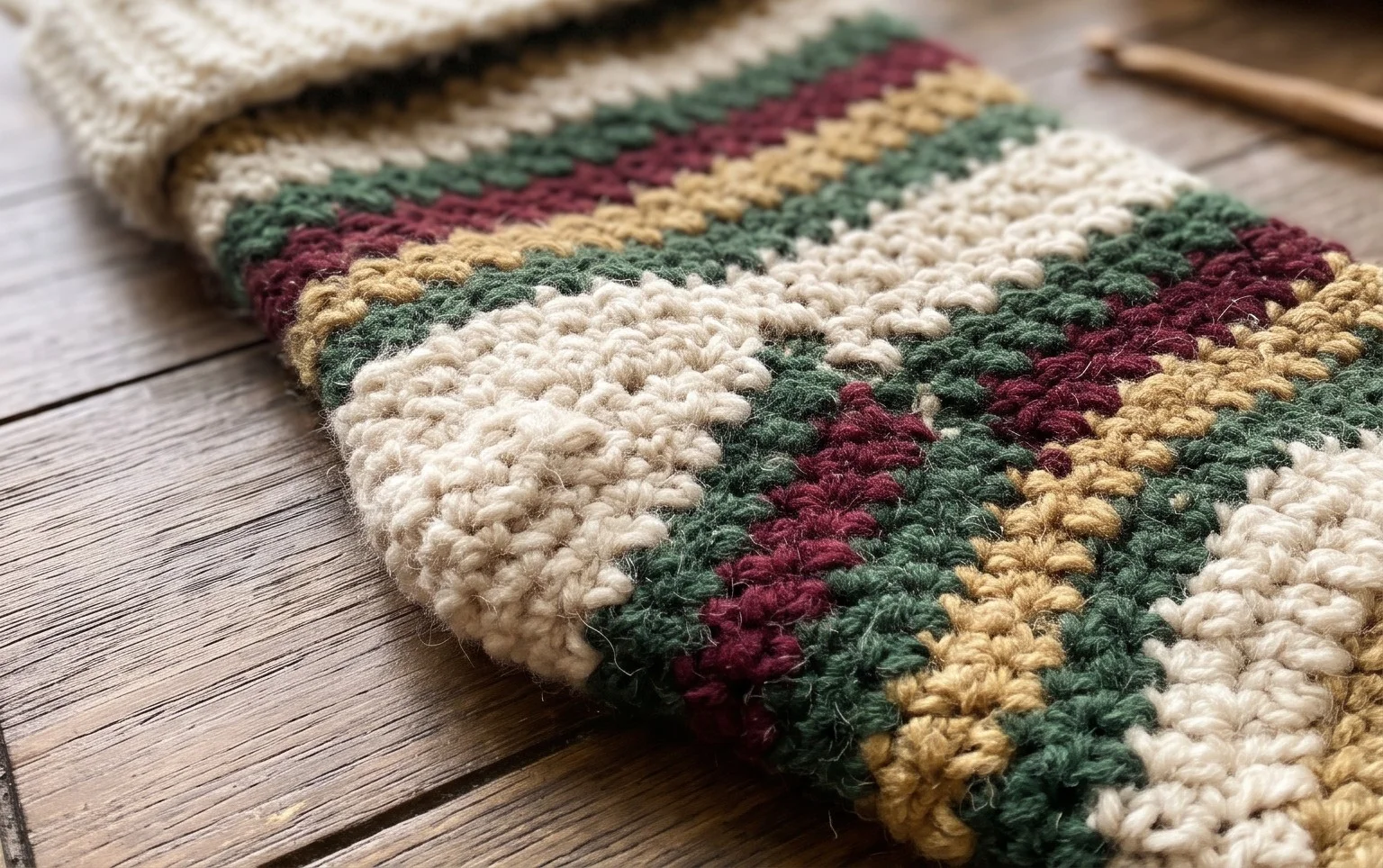 Pin for later!
A finished stocking chart gives you a clear plan for turning a few skeins of yarn into a personal holiday decoration, with each color change adding another part of the motif. For a simple variation, swap the traditional red and white for forest green and cream, or choose colors that match your family’s stockings. Keep your chart nearby as you work, and mark completed rows to make it easier to return to the project between busy December days. When your crochet is finished, share a photo on Pinterest or social media so other makers can see your color choices. Then explore more free patterns on the blog for your next handmade gift or seasonal project.
PinterestFacebookWhatsAppFlipboardShare
